Residential Energy Conservation
Introduction
Homeowners need straightforward what to do guidance on how to save money on utility bills. This site will provide you with a simple and logical approach to guide your energy saving efforts.
Turning your house into an energy efficient house, can reduce your energy bill by up to 40 percent. By using the information provided here, we hope to help you develop an energy conservation approach that can minimize the time and cost of obtaining these savings.
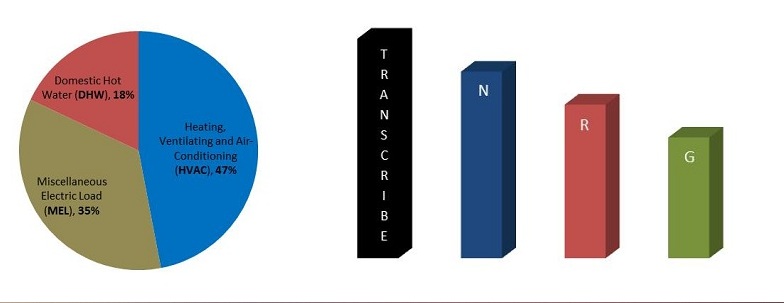
To develop this energy conservation approach, energy savings tasks are presented in the following three categories
N-now: Recommended tasks in all homes that you can do now to start savings energy dollars quickly
R-Research: Tasks that will require some additional thought and maybe some professional help to determine if they are economically beneficial for your home
G-Green: Tasks that may not be justifiable solely based on economic benefits but provide both long-term economic and environmental benefits
and energy consumption is separated into three categories.
HVAC (Heating, Ventilation and Air-Conditioning): HVAC energy includes space-heating, space-cooling and space-ventilation
MEL (Miscellaneous Electric Load): MELs are any electric energy used in your home that results from electronic devices not responsible for space-heating, space-cooling or water heating. MELs include: lighting, refrigerators, clothes washers and dryers, stoves, home entertainment centers, kitchen electronics, hair dryers, ceiling fans, power adapters, pool pumps, computer equipment, televisions and many others
DHW (Domestic Hot Water): DHW energy includes heating water for all domestic uses including: faucets, bathtubs, showers, clothes washing machines and dishwashers